Payday.
Business CPA Huntsville Alternative.Questions before payday is set up.
Setup puts a provider in place. After that, pay dates belong to the provider you operate.
Ask about setup.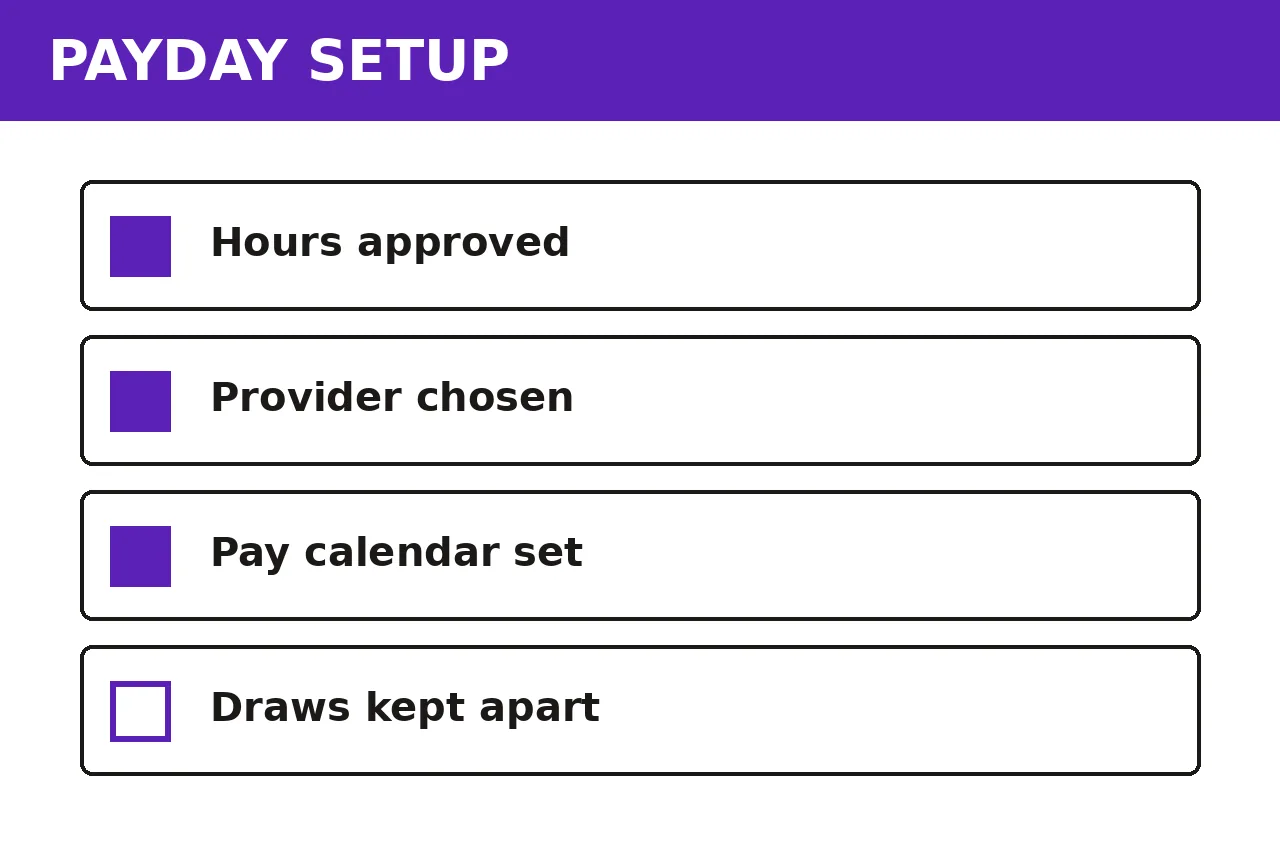
Payday.
Setup puts a provider in place. After that, pay dates belong to the provider you operate.
Ask about setup.Owners ask for payroll help and mean three different jobs. One job is getting the accounts, the provider, and the pay calendar to exist. Another job is running each pay date after that, filing the deposits, and handing people their stubs. A third job is a letter that vouches for the numbers. This address does the first job. Job two belongs to the provider you choose and run. A license holder, if anyone, does the third.
The questions worth asking before setup are dull and they save a month. Who approves hours. How often people are paid. Whether anyone is paid as a contractor who is really on the schedule every day. Which benefits, if any, come out of the check. Where the time records live. A setup that skips those questions builds a pretty provider account on top of a wrong fact.
The handoff is the moment the provider can issue a pay date with no further help from this practice. That limit is the whole boundary. A sales conversation can smudge it, which is why the same limit is said again here. After the handoff, each pay date belongs to the provider and to the owner. A Thursday call about a Friday deposit means the setup was treated as an open-ended engagement. An engagement of that kind belongs in a written scope with the provider, not as a quiet extra on the close.
The close still cares about payday, because wages hit the bank and the books. A matched month names the payroll withdrawals, the tax deposits the provider made, and the draws an owner took that are not wages. Mixing an owner's draw into wages is how a month and a pay report start to disagree. We label the draw. The provider's report stays the provider's report.
A new hire's paperwork is part of setup only when the provider account is being opened or a first payroll is being stood up. Ongoing hires after that are the provider's workflow and yours. We will say, on the first call, which side of that line the file is on. Guessing is how a shop thinks someone else filed a form that nobody filed.
Amounts on this page are deliberately absent. A pay rate, a deposit, and a penalty are facts about your file, and a general page that invents them is doing harm. Bring the provider's last report if you have one, or say you do not. An empty report is a better starting point than a remembered number.
Wanting one conversation for the books and the pay file is reasonable. The close can read the provider's report and tie it to the bank. Reading a report is not the same as issuing the report or running the pay date. The translation is in scope when the scope says so. Running payday stays outside that scope.
If payday has never been set up, the first product is a list. Accounts that exist, accounts that do not, the provider you will run, the first pay date that is actually possible, and the records that have to be in the provider before that date. We would rather hand you that list than pretend a pay date can be invented on a call.
Contractors, bonuses, and reimbursements each need their own label. A reimbursement that gets paid through payroll by habit becomes wages. A bonus that gets paid from the owner's pocket and never hits the provider becomes a mystery on the bank. Setup is when those habits get a name. After setup, the provider's rules are the rules, and a one-off still gets a note in the month it happened.
The form on this page is for the question, not for a Social Security number, a bank login, or a copy of a pay stub with a full account number. Send the shape of the problem. The records move after a scope, through a channel we name at that point, not through a public form.
Setup, a provider already running, or a letter someone else must sign.

You will be talking to the Steven Palmieri practice.