For owners in Huntsville.
Business CPA Huntsville Alternative.Sales tax on a receipt in Walker County.
One receipt in the city carries three rates, and the month has to split them.
See the receipt.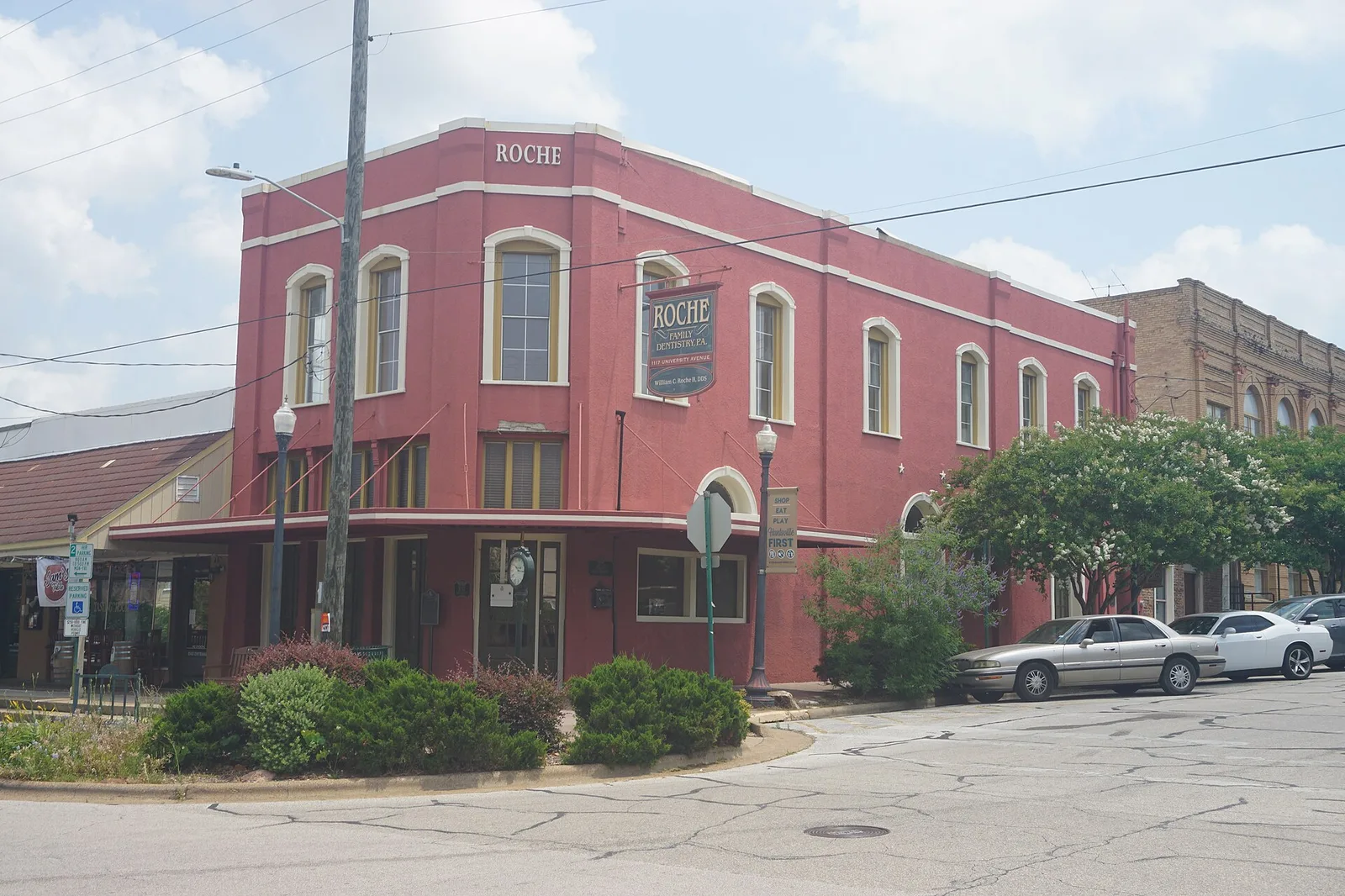
For owners in Huntsville.
One receipt in the city carries three rates, and the month has to split them.
See the receipt.A taxable receipt in the city totals 8.25 percent. The state piece is 6.25 percent. Look up 2236015 when you need the city's 1.5 percent, separate from the county half. The Walker County piece is 0.5 percent under local code 4236006, in effect since the first day of 1989. None of those three is optional on a taxable sale, and none of them is revenue. They are amounts collected for someone else, sitting inside a deposit until the books pull them out.
The failure mode is simple. The deposit hits the bank as one number. The sales report wants the sale without the tax. If the tax stays inside sales, the month looks richer than it was, the cost of goods percentage looks better than it was, and the return later inherits the lie. While the month is open, the collected tax leaves the deposit. The report on the twentieth is then a filing, not a reconstruction.
Food and lodging make the split louder. Accommodation and food in the county held 2,402 jobs in 2024 at a weekly wage of 392 dollars across 112 establishments. A weekend till in that sector is often the whole story of the month. The folk and cowboy music weekend every April is one of those weekends. We still ask which month the till belongs to, because a festival that straddles a weekend does not get to choose its own accounting period. The weekend can be loud and the month can still be one month.
A food-service permit in the city expires on 31 December. The fee schedule sets 175 dollars when the place has one to three employees and 275 dollars when it has four or more. A late renewal costs half the permit fee again. A pre-opening visit is 75 dollars, a re-inspection is 200 dollars, a mobile unit permit is 250 dollars for the year, and an itinerant permit is 35 dollars for an event. Those are city fees, not sales tax, and they belong on the same calendar as the receipt so December does not surprise anyone.
Gibbs Brothers began as Gibbs and Coffin in 1841, and the handbook still calls that run perhaps the oldest continuous business in the state. Continuity is a set of months that each carried forward. A receipt stack that cannot say which month it came from is not continuous, however long the shop has been open. That is the wink we bring back from a storefront that has outlasted almost every other sign on a Texas square. Age on a sign does not close March.
We do not publish a street for the shop in the photograph, and we do not keep a room in the city where you could drop a bag of tapes. The photograph is a real downtown front so the page is obviously about this place. The work is still the file. You keep the register. We take the export, the bank, and the question of which deposits still have tax inside them.
Hotel rooms have their own city tax on top of the state's room tax. The city report uses 7 percent of taxable room receipts under ordinance 74-23 as amended. The state piece is a different return, due on its own twentieth, at 6 percent when the room rate is high enough for that tax to apply. A lodging file that dumps both into one sales-tax box will be wrong twice. We keep the room tax on its own line and the sales tax on its own line.
The county rate on the receipt is easy to forget because 0.5 percent feels small next to the state. Across a year of food sales that half percent adds up, and it stays separate from the city's 1.5 percent. Coding both local pieces as one lump makes the city's report and the county's report fight each other. The codes exist so the two local pieces can be named. We name them.
If a sale is exempt, the receipt should say so, and the deposit should not contain a tax that was never charged. We do not invent exemptions. We ask. An open item that says exemption not yet supported is a better month than a silent zero. The return can survive an open item. It cannot survive a confident number that was never true.
Owners in Huntsville who sell across the city limit need the rate for the delivery, not the rate of the kitchen. That is a mapping question, and it belongs in the month it happened, not in a cleanup the following spring. We mark the odd deliveries as their own lines. The ordinary in-city receipt stays on 8.25 percent until someone shows a reason it should not.
A single receipt is enough to see whether tax is still hiding in the deposit.

You will be talking to the Steven Palmieri practice.